
Hey there, my friend.
Sometimes a book arrives in just the right season. I picked up Julie Klassen’s “The Secret of Pembrooke Park” because I wanted a good historical mystery with a strong romantic thread—but I also wanted to see how another author handles faith on the page. What I found was one of those rare stories that made me both race through the chapters and, at the same time, not want the book to end.
This isn’t a full‑on “whodunit” in the classic sense, where the whole experience is about catching the killer before the detective does. Instead, it’s a “multilayered puzzle and suspense story”, wrapped in romance and filled with genuine spiritual reflection. And for me, it worked beautifully.
A House Full of Secrets and a Mystery That Flows
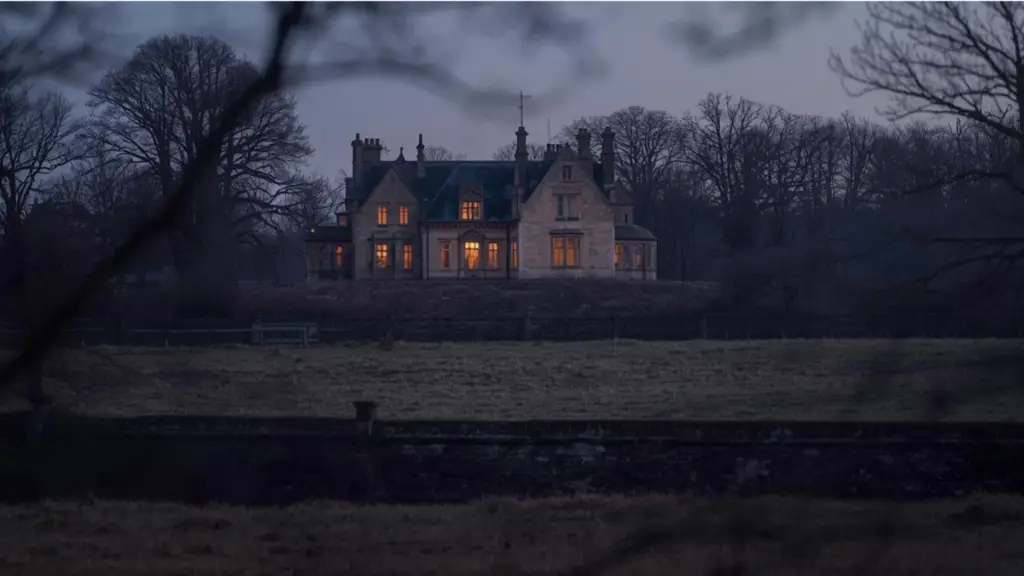
The premise itself is deliciously Gothic: Abigail Foster’s family faces financial ruin, and an anonymous benefactor offers them the use of an abandoned manor, Pembrooke Park, on almost impossibly generous terms. When Abigail arrives, she finds the house arrested in time—tea cups still on tables, clothes left in wardrobes, a doll’s house mid‑play. A place that feels like its inhabitants simply vanished.
From there, the mystery builds in layers:
– Why was the house abandoned in such a hurry?
– What really happened to the Pembrooke family?
– Is there truly a secret room filled with treasure, or only rumors and wishful thinking?
– Who is sending Abigail anonymous letters with warnings and clues?
What I appreciated most is that the plot doesn’t jerk from twist to twist; it flows. The suspense is steady rather than frantic. Klassen gives each thread—Abigail’s search, the town’s secrets, the family’s past—enough time to breathe, so that by the time answers begin to surface, they feel earned rather than flung at the reader.
More Than Tropes in Period Costumes
As someone who reads a lot of historical fiction, I have a soft spot for spinster‑aged heroines, crumbling houses, and curates with kind eyes. It can be easy, though, for those familiar elements to turn into nothing more than tropes in pretty costumes.
That’s not what happens here.
Abigail Foster isn’t simply “the practical sister” as a type; she’s a fully drawn woman at the end of herself:
– She worries about her family’s finances and her own lack of dowry.
– She feels the sting of watching a man she once hoped for turn his attention to her younger, prettier sister.
– She carries responsibility and disappointment in equal measure.
Her journey is not about learning to be less practical—it’s about learning to see herself the way God sees her, and to trust that He has not, in fact, passed her by. When she finally reaches the moment of realization, it doesn’t feel forced. It’s the kind of spiritual and emotional turning where you think, “Yes. She’s ready for this.”
The romance reflects that same depth. The relationship between Abigail and William Chapman, the local curate, is a slow‑burn friendship‑to‑love arc that grows out of shared conversations, shared questions, and shared service.
William is kind, thoughtful, occasionally awkward in the best way, and clearly a man of God—not in a stiff sense, but in the way he treats people and handles his disappointments. Their relationship doesn’t feel like a backdrop decoration; it’s woven into the core of who they are becoming.
Faith Forward Without Feeling Forced
One of the reasons I picked up “The Secret of Pembrooke Park” was to see how Klassen handled faith in a story that also had a strong mystery spine. I was not disappointed.
The faith elements are some of the best I’ve read in a while:
– They are succinct—no one delivers pages of sermon disguised as dialogue.
– They are specific—characters wrestle with guilt, grace, forgiveness, and how to respond when hurt is real and long‑standing.
– They feel earned—each reflection grows out of what the characters have lived through, not dropped in from nowhere.
Mystery, Suspense, and the Pace of Real Change
As a writer of Christian historical mysteries myself, I pay close attention to how other authors structure their suspense. Here, Klassen’s mystery is:
– Multilayered: family secrets, old betrayals, unexplained disappearances, and a very literal hidden room all intersect.
– Character‑driven: the tension rises not just because “something bad might happen,” but because someone we have come to care about keeps stepping closer to danger.
– Well paced: revelations come when both the character and the reader are ready for them.
There is danger here—murder in the backstory, threats in the present—but it’s handled with restraint and moral seriousness. The focus is not on graphic depiction, but on the emotional and spiritual weight of what has happened and what forgiveness might cost.
I finished the book feeling not just entertained, but full—that rare combination of satisfaction with how the story resolved and a quiet sense that something in me had been invited to grow alongside Abigail.
What I’m Carrying Forward as a Reader and Writer
Whenever I read another author’s work at this level, I ask myself, “What can I learn from this?”
From “The Secret of Pembrooke Park”, I’m carrying forward:
– The reminder that mystery doesn’t have to be frantic to be compelling; a strong, steady flow can be just as gripping.
– The confidence that faith can be handled succinctly and deeply, without over‑explaining.
– The encouragement that readers are willing to walk with a heroine through real growth, as long as each step feels true to what she’s lived.
If you are a reader who loves:
– Immersive historical settings
– Genuine spiritual reflection
– A puzzle that reveals more about hearts than about fingerprints
– And a romance that grows slowly but surely into something solid
then I have a feeling you’ll find “The Secret of Pembrooke Park” as rich and rewarding as I did.
All the very best for the week ahead,
Katy